
 English
 Spanish
 French
 German
 Italian
 Chinese (Simplified)
 Japanese
 Korean
 Arabic
 Portuguese



 Send Inquiry
Compound Die
Price 5000 INR/ Unit
Compound Die Specification
- Core Material
- Tool Steel
- Life Span
- 50,000 - 100,000 Cycles
- Working Process
- Stamping, Cutting, Forming
- Tolerance
- 0.01 mm
- Mould Base
- Steel, Precision Machined
- Material
- Alloy Steel
- Shaping Mode
- Compound Die
- Punch Dies
- High-Speed Steel Inserts
- Die Head
- Multi-Part Construction
- Die Type
- Progressive & Compound
- Die Dimensions
- Customizable as per requirement
- Design Standard
- ISO 9001:2015
- Surface Finish
- Polished, Ground
- Installation
- Direct Fit to Press Machine
- Cutting Clearance
- 0.05 mm - 0.20 mm
- Application
- Sheet Metal Fabrication
- Maintenance
- Easy Replacement of Parts
- Hardness
- HRC 58 - 62
- Heat Treatment
- Induction Hardened
Compound Die Trade Information
- Minimum Order Quantity
- 1 Unit
- Payment Terms
- Telegraphic Transfer (T/T), Cheque
- Sample Available
- Yes
- Sample Policy
- Sample costs shipping and taxes has to be paid by the buyer
- Packaging Details
- as per requirements
- Main Domestic Market
- All India
About Compound Die
We have quality tested Compound Dies that help us to excel at progressive die stamping. These tools are used for high volume manufacturing and known to operate at high speed. Our tools are appreciated for being durable, qualitatively flawless, strong & high performing. They apply force from diverse directions on metals with the use of hybrid compound dies. There is a large scale demand for these tools all over India. To meet all these demands, we provide Compound Dies to our customers in different sizes and shapes.
Compound Dies are offered with process where the die detaches or blanks the part from a steel strip. These are capable to perform multiple punches or cuts in one stroke, as comparison to multiple strokes. These cost effective methods for stamping medium to high volume parts can help in maintaining labor as well as die costs reduced. Employed to stamp simpler flat parts, the feed pace of the the offered product can be determined by their size. Typically, the dies do not need a cut-off station as the parts are emptied through the strip. These are added to assist in managing the scrap material.
| Brand | Creative Engineers |
| Hardness | 62-67 HRC |
| Material | HSS |
| Usage | Stamping Dies |
| Country of Origin | Made in India |
| Usage/Application | Power Press |
Tailored for Precision and Durability
Designed for rigorous sheet metal fabrication, our compound dies offer custom dimensions and superior surface finishes. Utilizing induction-hardened tool and alloy steels, they meet demanding ISO 9001:2015 standards, resulting in robust performance and extended operational life. The multi-part construction and high-speed steel punch inserts guarantee consistent, high-accuracy results across stamping, cutting, and forming applications.
Effortless Integration and Maintenance
These dies are engineered for direct press machine integration, allowing for rapid installation and easy replacement of components. The use of precision machining ensures exact fit and function, while our design facilitates swift maintenance. This keeps downtime minimal and productivity high, making our product ideal for dynamic fabrication environments.
FAQs of Compound Die:
Q: How do I choose the right compound die specifications for my sheet metal fabrication needs?
A: Consider factors such as material type, sheet thickness, and desired stamping or forming processes. Our dies offer customizable dimensions and tolerances of 0.01 mm and are compatible with a range of press machines. We provide expert advice to ensure your requirements are matched perfectly.Q: What surface finishes are available for your compound dies, and why are they important?
A: Our compound dies are available with polished or ground surface finishes. These finishes enhance the quality of stamped parts, reduce friction during operation, and help extend die life by minimizing wear and tear.Q: When should die parts be replaced, and is maintenance complicated?
A: Die parts should be replaced when you notice decreased cutting precision or surface wear after prolonged usetypically between 50,000 and 100,000 cycles. Replacement is straightforward, as our design supports easy access and simple replacement of individual components.Q: Where can your compound dies be installed, and are they compatible with all press machines?
A: Our dies are designed for direct installation into most standard press machines used in sheet metal fabrication. Custom dimensions ensure compatibility with different machine models as per your operational needs.Q: What benefits do induction-hardened, high-precision dies offer compared to standard tooling?
A: Induction-hardened dies, rated HRC 5862, deliver superior longevity and consistent accuracy, supporting extended production runs. Their robust construction minimizes wear, maintains tight clearances, and reduces the frequency of maintenance, which translates to cost savings and improved production efficiency.Q: How does the progressive or compound die design enhance the fabrication process?
A: These die types streamline multiple fabrication stepscutting, stamping, and forminginto one process, increasing efficiency and consistency. The multi-part die head design further enables precise, repeatable output for high-volume production.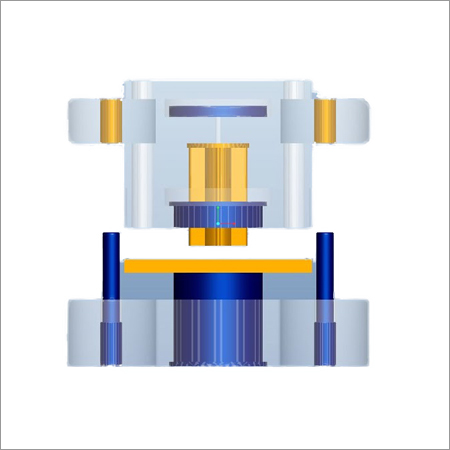

Price:
- 50
- 100
- 200
- 250
- 500
- 1000+

More Products in Dies & Tools Category

Progressive Die
Price Range 10000.00 - 100000.00 INR / Unit
Minimum Order Quantity : 1 Unit
Mould Base : As per customer requirement, Steel, Brass
Tolerance : 0.001 Millimeter (mm)
Working Process : Punching, Stamping, Bending
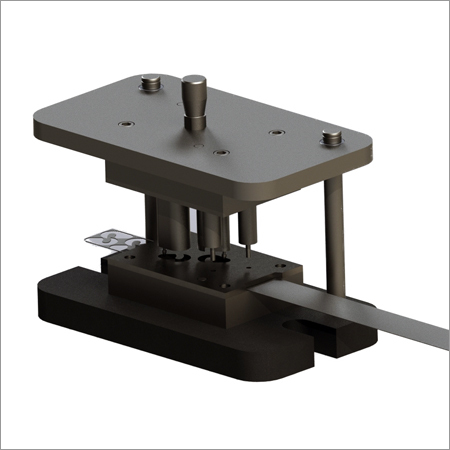
Punching Tools and Dies
Price 5000 INR / Unit
Minimum Order Quantity : 1 Unit
Mould Base : High Precision Steel
Tolerance : 0.01 mm
Working Process : Other, Punching, Stamping, Cutting
Multi Cavity Press Die
Price 10000 INR / Unit
Minimum Order Quantity : 1 Unit
Mould Base : Highgrade steel, precision machined for stability and durability
Tolerance : 0.01 mm
Working Process : Other, Stamping, blanking, cutting, forming
Wire EDM Job Work
Price Range 1000.00 - 10000.00 INR / Unit
Minimum Order Quantity : 1 Unit
Mould Base : Steel
Tolerance : 0.01 mm
Working Process : Other, Electrical Discharge Machining (EDM)

GST : 24AALFC4260B1ZX
 Send Inquiry




 |
CREATIVE ENGINEERING WORKS
All Rights Reserved.(Terms of Use) Developed and Managed by Infocom Network Private Limited. |
